The Israel–Iran conflict of 2025–2026 was fought on two visible fronts. The first involved fighter jets, bombers, missile launches, and strikes against nuclear and military facilities. The second was largely invisible: a high-speed contest between radar systems, ballistic missiles, electronic sensors, and interceptor weapons.
This second conflict—the interceptor war—helped determine which attacks reached their targets, how much damage each side suffered, and whether the war could continue at its original intensity.
The story began with the Twelve-Day War in June 2025. It expanded dramatically on February 28, 2026, when the United States and Israel launched a major attack on Iran that killed Supreme Leader Ayatollah Ali Khamenei. What followed was not merely a campaign of offensive strikes. It was a test of whether modern air-defense systems could protect a country from increasingly sophisticated missile attacks.
The Twelve-Day War

To understand the 2026 conflict, it is necessary to begin eight months earlier.
On June 13, 2025, Israel launched a major military operation against Iran. The campaign targeted Iranian nuclear and military facilities, including the underground enrichment complex at Natanz. Israel also carried out reported covert operations designed to weaken Iran’s defenses and disrupt its military command structure.
Several senior Iranian commanders were killed in the opening phase. Among them were Hossein Salami, commander of the Islamic Revolutionary Guard Corps, and Mohammad Bagheri, chief of staff of Iran’s armed forces. The strikes also killed nuclear scientists and damaged Iranian air-defense infrastructure. (Britannica)
Iran responded with waves of ballistic missiles and drones aimed at Israel. For the first time, the two countries exchanged direct fire on such a large scale. The confrontation quickly became known as the Twelve-Day War.
The conflict escalated further on June 21, when the United States entered the war directly. American B-2 bombers struck Iran’s Fordow enrichment facility, an underground site built deep beneath a mountain. The objective was to damage a facility that would have been difficult to destroy through conventional airstrikes alone.
Two days later, Iran retaliated against the American military presence in the region by launching missiles at Al Udeid Air Base in Qatar. The attack appeared to be carefully limited, and no American casualties were reported. (Congress.gov)
A ceasefire was announced on June 24, 2025, after diplomatic pressure from Washington and regional mediation involving Qatar. Although the truce was tense and both sides accused the other of violations, it ultimately held for approximately eight months.
That pause created the impression that the Twelve-Day War might have been an isolated confrontation. In reality, it became the foundation for an even larger conflict.
February 28: The Ceasefire Breaks

The next phase began on February 28, 2026.
Diplomatic talks between Washington and Tehran had been losing momentum. Then, within a period of roughly twelve hours, the United States and Israel launched an extensive coordinated campaign across Iran.
The opening wave targeted missile bases, air-defense installations, command centers, military infrastructure, and senior leadership. Contemporary reports described hundreds of strikes and roughly five hundred individual sites hit during the initial operation.
One of the most consequential targets was the Tehran compound of Iran’s Supreme Leader, Ayatollah Ali Khamenei.
Khamenei had led Iran since 1989, making him the central political, religious, and military authority in the Islamic Republic. His death was not the result of a coup, a negotiated transition, or an internal power struggle. He was killed in an airstrike at the beginning of an active military campaign.
Iranian state media confirmed his death on March 1 and announced forty days of national mourning. Reuters reported that the operation also killed other senior figures, including Iranian military leaders and advisers.
The result was an extraordinary institutional crisis. Iran had to organize its wartime chain of command while the country was still under attack. An interim leadership council took control, and the succession process unfolded under conditions of intense military and political pressure.
Eventually, Mojtaba Khamenei, the late leader’s son, emerged as his successor. The transfer of authority therefore took place not in a controlled ceremonial environment, but during a war in which Iran’s military infrastructure and leadership had already suffered major losses.
The Invisible Battle

Once Iran began retaliating, the focus shifted from the aircraft that launched the opening attacks to the defensive systems attempting to stop the response.
Israel relies on a layered air-defense network. Each layer is designed for different types of threats, ranges, and altitudes.
| System | Main role | Typical threat category |
|---|---|---|
| Iron Dome | Short-range interception | Rockets, artillery, and short-range projectiles |
| David’s Sling | Medium-range defense | Large rockets, cruise missiles, and some ballistic missiles |
| Arrow | Upper-tier ballistic missile defense | Long-range ballistic missiles, including threats outside the atmosphere |
| Aegis-equipped ships | Offshore missile defense | Ballistic missiles and other aerial threats |
Iron Dome forms the lowest layer of the system, primarily defending population centers against short-range rockets. David’s Sling operates at a higher tier against larger rockets, cruise missiles, and lower-tier ballistic threats. Arrow provides the upper layer, including Arrow-3 interceptors designed to engage ballistic missiles outside the atmosphere.
The concept is similar to defending a city with several security fences. If one layer misses a threat, another has a chance to stop it. No single system is expected to defeat every incoming weapon.
This architecture helped Israel intercept a large proportion of the missiles fired during the conflict. But even a very high interception rate does not mean complete protection.
A small percentage of missiles getting through can still produce serious consequences when the incoming attacks involve heavy warheads, dense urban areas, or critical infrastructure.
Why Ballistic Missiles Are So Difficult

A ballistic missile travels through several distinct phases.
First, its rocket engine accelerates it upward. Then it follows a high-altitude trajectory, often passing through the upper atmosphere or space. Finally, it re-enters the atmosphere at extreme speed and descends toward its target.
That creates a difficult defensive problem. A system must detect the launch, calculate the missile’s path, identify the likely target, select an appropriate interceptor, and destroy the incoming warhead—often within minutes.
The challenge becomes greater when a missile uses decoys, maneuverable re-entry vehicles, electronic countermeasures, or multiple warheads.
An interceptor is also not simply “another missile.” It is part of a larger system involving satellites, early-warning sensors, ground-based radar, command networks, launchers, and operators. If any part of that chain fails, the defensive response may be delayed or misdirected.
The Cluster-Warhead Problem

During the 2026 conflict, Iranian ballistic missiles equipped with cluster warheads created a particularly difficult challenge for Israeli defenses.
A conventional ballistic missile may carry one primary warhead. A cluster warhead can separate during flight and release multiple smaller submunitions across a wider area. Reuters reported that some Iranian cluster warheads contained approximately 24 submunitions, each weighing between 2 and 5 kilograms (Reuters)
That changes the interception problem.
An interceptor system may successfully destroy the incoming missile body, but if the warhead has already dispersed, the defense network may suddenly face numerous smaller objects rather than one track. Each object may require detection, classification, and engagement.
The problem is not only technical. It is also mathematical.
Suppose a defensive system has a limited number of interceptors available during a barrage. Against ten incoming missiles, it may be able to assign multiple interceptors to each target. But if those missiles release hundreds of submunitions, the number of objects increases sharply while the available defensive ammunition remains finite.
This creates a saturation problem: the attacker tries to force the defender to spend more interceptors than it can quickly replace.
Reports from Israeli officials and military analysts suggested that a significant portion of Iranian missiles used in the conflict carried cluster warheads. Those claims have varied over time and should be treated carefully, but the broader challenge is clear: multiple-object warheads complicate both radar tracking and interception.
Cluster weapons also pose a grave danger to civilians because unexploded submunitions may remain hazardous after the attack. Human Rights Watch later confirmed several cases involving cluster munitions delivered toward populated areas and warned of the long-term risks to civilians. (The Jerusalem Post)
The American Naval Layer

Israel’s air-defense network did not operate alone.
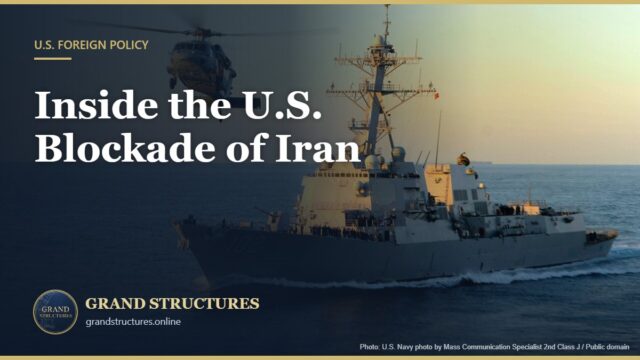
The United States moved five Arleigh Burke-class destroyers into the Eastern Mediterranean. These vessels are equipped with the Aegis combat system, which integrates powerful radar with long-range surface-to-air missiles capable of engaging ballistic missile threats.
The ships added an offshore defensive layer to the regional architecture. Their position allowed them to monitor missile launches and, depending on trajectory and engagement conditions, attempt interceptions before missiles reached Israel or other threatened locations.
This was strategically important for two reasons.
First, it increased the number of available sensors and interceptors. Second, it reduced pressure on Israel’s own stockpile. Interceptors are expensive, complex, and limited in number. A defense system can perform well in a short exchange but become vulnerable during a prolonged war if its ammunition is not rapidly replenished.
The presence of American ships also demonstrated that missile defense had become an allied responsibility. The conflict was no longer only about Israel’s ability to protect its territory. It involved American forces, military bases, Gulf partners, and shipping routes across the wider region.
Missiles Still Got Through
Despite the layered defenses, some missiles struck their targets.
Israel reported approximately 26 deaths and about 4,292 injuries from Iranian retaliatory attacks after the war restarted in February. Iranian casualties were reported to be substantially higher, although the figures remain contested.
Iran told the United Nations Security Council that hundreds of civilians had been killed or wounded. Iranian authorities also reported that a strike hit a primary school in southern Iran and claimed that more than 100 children died there. At the time of reporting, that specific claim had not been independently verified.
The Iranian human-rights organization HRANA estimated approximately 657 deaths and more than 2,000 wounded by June 20. Those numbers, like the figures released by governments, were compiled during an active war and should be treated as estimates rather than a final historical count.
The uncertainty surrounding casualty figures is itself part of the information war. Governments have incentives to emphasize their military achievements, minimize their own losses, and highlight civilian suffering caused by the opposing side.
The defensive question, however, remains straightforward: even when most missiles are intercepted, the remainder can still kill civilians, damage buildings, disrupt infrastructure, and create panic.
From Battlefield to War of Attrition
The war did not end with one clean ceasefire.
On April 8, 2026, Pakistan helped broker a two-week pause between the United States and Iran. That pause opened the way for talks in Islamabad. On June 17, negotiators signed a 14-point memorandum of understanding covering issues including the Strait of Hormuz, Iran’s nuclear and missile programs, sanctions relief, and the cessation of military operations.
For a time, the agreement appeared to offer a possible path out of the conflict. But its implementation remained vulnerable to violence elsewhere in the region.
Fighting involving Israel and Hezbollah in Lebanon repeatedly threatened the broader diplomatic process. Israel’s military operations in southern Lebanon also produced large-scale displacement. By September, humanitarian reporting estimated that hundreds of thousands of Lebanese remained displaced, even after the number had fallen from its peak.
The memorandum eventually expired without producing a durable final settlement.
By September 2026, analysts increasingly described the conflict as a war of attrition. Iran’s ability to launch large-scale attacks appeared to be narrowing, while its economy absorbed the effects of sanctions, isolation, military damage, and restrictions affecting shipping through the Strait of Hormuz.
At the same time, the regional conflict had become wider and more complex. Saudi Arabia, the United Arab Emirates, Kuwait, and Bahrain were aligned with Washington and Israel, while Iran continued to rely on a network of allied groups and partners, including Hezbollah in Lebanon, militias in Iraq, and the Houthis in Yemen.
The result was not a single battlefield, but a connected regional system in which a strike in one country could trigger missile launches, naval threats, or militia attacks somewhere else.
What the Interceptor War Reveals
The events of 2025–2026 reveal several important truths about modern warfare.
Air defense is not an invisible shield
Missile-defense systems can save thousands of lives, but they cannot guarantee that every projectile will be stopped. They reduce damage; they do not eliminate risk.
Defense depends on stockpiles
An interceptor system is only as effective as the number of missiles available for use. A country may successfully defend against one barrage but face difficult decisions during weeks or months of repeated attacks.
Saturation favors the attacker
Attackers can combine ballistic missiles, drones, cruise missiles, decoys, and cluster warheads to force defenders to track more objects and make more decisions. Even a sophisticated defense network can be strained when attacks arrive in large numbers.
Geography still matters
Israel’s relatively small territory gives defenders less time to respond. A missile launched from Iran may travel a long distance, but once it approaches its target, the final engagement window can be extremely short.
Alliances are part of the defense system
American destroyers, regional bases, shared radar, intelligence cooperation, and resupply networks all contribute to Israel’s ability to withstand missile attacks. Modern air defense is increasingly an alliance capability rather than a national one.
An Unresolved Conflict
The Israel–Iran war of 2025–2026 is not simply a story about who launched the first strike or which side claimed victory.
It is a story about how modern states attack and defend at the same time. Aircraft attempt to destroy missile launchers before they can fire. Ballistic missiles seek to overwhelm radar and interceptor networks. Defenders calculate which threats to engage, which areas to protect, and how many interceptors they can afford to use.
Underneath the political speeches and battlefield footage, the war is being decided in seconds: a radar detects a track, a computer estimates its trajectory, an operator confirms the threat, and an interceptor launches.
That sequence may determine whether a missile disappears in the upper atmosphere or reaches a city below.
The conflict remains unresolved, and ceasefires have repeatedly proven fragile. The diplomatic landscape can change quickly, particularly when fighting spreads across Lebanon, Iraq, the Gulf, or the Red Sea.
The clearest lesson is that missile defense can buy time, reduce casualties, and protect critical infrastructure—but it cannot create permanent security by itself. As attackers develop faster missiles, multiple warheads, decoys, and saturation tactics, defenders must constantly adapt.
The next stage of this conflict may therefore be shaped as much by interceptor production and radar technology as by diplomacy or battlefield territory. The question is no longer only whether a missile can be launched.
It is whether the defender has enough time, enough information, and enough interceptors to stop it.