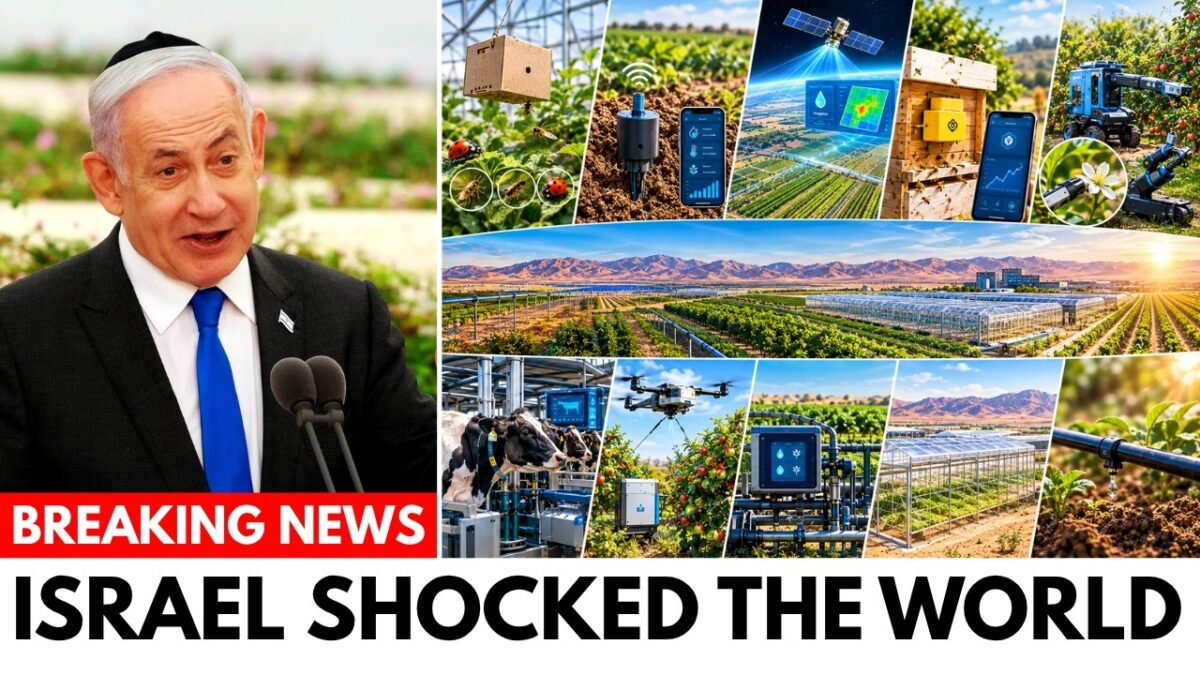
Feeding more than 8 billion people on a planet with limited fresh water may be the greatest engineering challenge of our time. One small, water-starved country has quietly become the world’s research lab for solving it. Israel’s farmers work with scarce water, hot climates and poor soils, which forced them to invent tools that are now used across the globe.
Here are ten remarkable examples of Israel agriculture technology — from flying robots to underground sensors — and the engineering ideas behind them.
Watch the Full Documentary
1. Drip Irrigation
The story begins with a leak. In the 1930s, water engineer Simcha Blass noticed a tree growing unusually well beside a leaking pipe. Decades later, he helped develop modern drip irrigation, which delivers water drop by drop directly to roots. The company Netafim, founded on a kibbutz in 1965, turned it into a global industry. Drip systems can cut water use dramatically compared with flood irrigation.
2. Flying Fruit-Picking Robots
Tevel Aerobotics developed tethered drones that fly among orchard trees, use computer vision to identify ripe fruit and pick it with robotic arms. They address labor shortages that leave fruit rotting on trees.
3. Underground Soil Sensors
Probes buried in fields measure moisture, temperature and salinity at multiple depths, sending data wirelessly to farmers’ phones. Companies like CropX use this to tell growers exactly when and how much to irrigate.
4. Bee-Mimicking Pollination
Some crops, like tomatoes, release pollen when vibrated — the “buzz pollination” bumblebees perform. Israeli startups have developed devices and robots that vibrate flowers or blow pollen precisely, supplementing declining bee populations.
5. Autonomous Greenhouses
Computer-controlled greenhouses regulate light, heat, humidity, carbon dioxide and fertigation automatically. In Israel’s deserts, they allow year-round production of vegetables, herbs and flowers using a fraction of traditional water.
6. Satellite and Drone Crop Monitoring
Multispectral imagery reveals plant stress before it is visible to the human eye. Platforms analyze satellite and drone images to detect disease, pests and water shortage across fields.
7. Fertigation
Fertigation injects fertilizer directly into drip irrigation water. Plants receive exactly the nutrients they need, reducing runoff that pollutes rivers and groundwater.
8. Recycled Water Irrigation
Israel recycles nearly 90% of its wastewater, mostly for agriculture — far more than any other country. Treated water flows through dedicated pipelines to farms, freeing fresh water for cities.
9. Biological Pest Control
Beneficial insects and predatory mites bred by companies like BioBee replace many chemical pesticides in greenhouses and orchards.
10. Smart Dairy Systems
Israeli dairy farms are among the most productive in the world. Sensors track each cow’s movement, health and milk output, allowing farmers to spot illness early and optimize feeding.
Key Facts at a Glance
- Origin story: a leaking pipe that inspired drip irrigation
- Global leader: Netafim, founded 1965
- Water recycling: nearly 90% of wastewater reused
- Trend: AI, robotics and sensors across the farm
Why It Matters for American Farms
Farmers in California’s Central Valley, Arizona and the Great Plains face shrinking water supplies. Many already use Israeli drip systems and sensors. As droughts intensify, these technologies could shape the future of American agriculture.
Frequently Asked Questions
Who invented drip irrigation?
Simcha Blass and his son Yeshayahu developed modern drip irrigation, commercialized by Netafim.
How much water does drip irrigation save?
Often 30–60% compared with flood irrigation, depending on the crop and conditions.
Are flying fruit-picking robots in use?
Yes, in commercial pilots in orchards in Israel, Europe and the U.S.
Grand Structures explains the engineering, defense technology and megaprojects shaping the Middle East and the world. For more deep dives like this, subscribe to Grand Structures on YouTube.