A national blood bank is one of the few facilities that can never be allowed to stop — and in wartime it is needed more than ever. Israel’s old blood center in Tel Aviv relied on a simple wartime plan: when rockets flew, staff physically carried sensitive equipment and blood units into a reinforced shelter. As threats grew, that approach could not keep up.
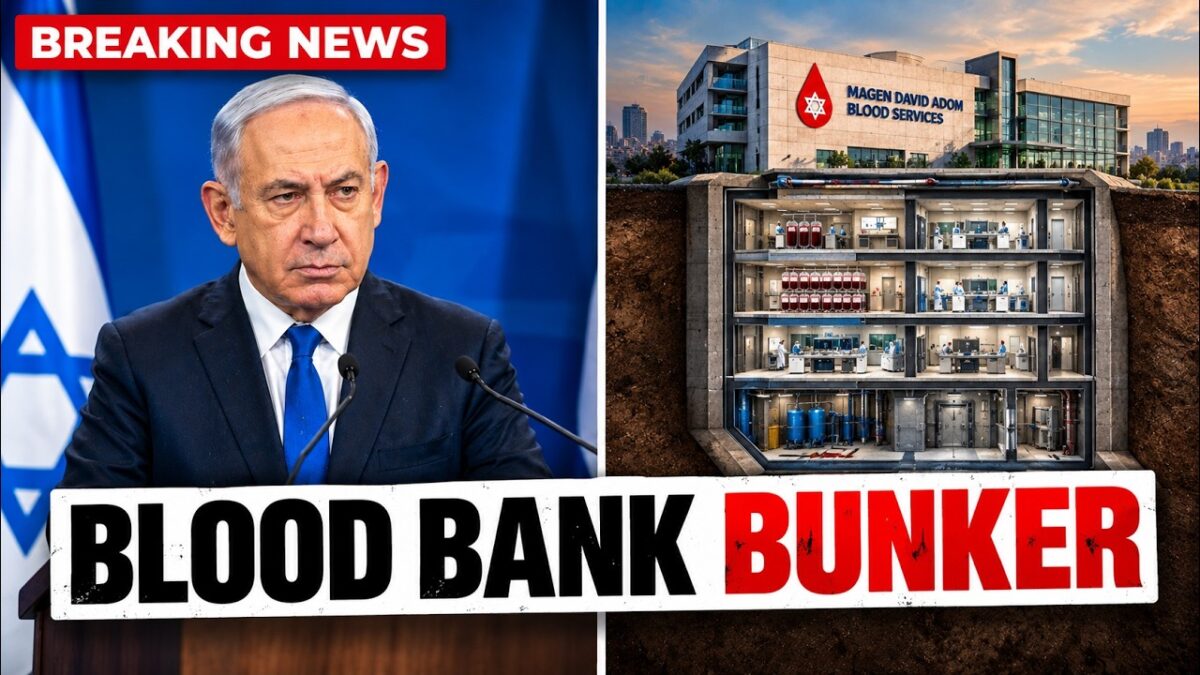
The solution was the Marcus National Blood Services Center in Ramla, a roughly $135 million facility operated by Magen David Adom, Israel’s national emergency medical service. Its guiding principle was “build the armor in, not on.” The most critical operations sit around 50 feet underground, protected against missiles, earthquakes and chemical and biological threats.
Watch the Full Documentary
Why Put a Blood Bank Underground?
Blood products have short shelf lives and strict temperature requirements. Platelets last only days. A national blood service collects, tests, separates, stores and distributes hundreds of thousands of units each year. If the central facility is damaged, hospitals across the country are affected within days. Placing processing labs, storage and command functions below ground protects them from direct hits, blast and fragments.
A Fortress in Concrete
The underground levels are built from thick reinforced concrete designed to resist blast loads and the ground shock from nearby impacts. Heavy blast doors seal entrances, and the structure is designed to remain functional even if upper floors are damaged. The building above ground houses offices, donation areas and other less critical spaces.
Israel’s earthquake risk also factors in. The country sits near the Dead Sea Transform fault system, so the facility is engineered to keep working after a major quake as well as an attack.
Breathing Safely
Protecting a building from explosions is only part of the challenge. Chemical or biological agents could contaminate the air. The facility uses overpressure filtration: air is drawn in through high-efficiency filters, including activated carbon and HEPA stages, and the protected spaces are kept at slightly higher pressure than outside. Any leak pushes clean air out instead of letting contaminated air in.
Power, Water and Cold Chain
An underground blood bank is useless without refrigeration. The center has backup generators, fuel storage and redundant cooling systems to protect the cold chain. Water supply, communications and IT systems are similarly duplicated so that the facility can operate independently for extended periods.
Built for Continuity, Not Just Survival
The real goal is not that the building survives, but that it keeps working. Staff can continue processing donations and dispatching blood to hospitals during sirens without moving equipment. That continuity saved precious time during the conflicts that followed the facility’s opening.
Key Facts at a Glance
- Facility: Marcus National Blood Services Center, Ramla
- Operator: Magen David Adom
- Cost: about $135 million
- Protected depth: around 50 feet (15 meters)
- Protection: blast-resistant concrete, blast doors, overpressure air filtration
American Support
Much of the funding came from donors in the United States through American Friends of Magen David Adom. The facility is a rare example of American philanthropy directly financing hardened national infrastructure abroad.
Lessons for U.S. Hospitals
American hospitals plan for hurricanes, earthquakes and power outages rather than missiles, but the same continuity principles apply: protect the most critical functions, build redundancy into utilities, and design so that staff never have to move equipment in a crisis.
Frequently Asked Questions
When did the underground blood center open?
It became operational in 2023.
What is Magen David Adom?
Israel’s national emergency medical, ambulance and blood services organization.
Can it withstand a direct missile hit?
Its underground levels are designed to remain operational under heavy attack.
Grand Structures explains the engineering, defense technology and megaprojects shaping the Middle East and the world. For more deep dives like this, subscribe to Grand Structures on YouTube.