For centuries, pilgrims visiting Jerusalem were shown a small pool they were told was the Pool of Siloam — the place where, according to the Gospel of John, Jesus healed a blind man. But many scholars doubted the site. The pool visitors saw dated to the Byzantine era, centuries after the time of Jesus, and some argued the biblical pool was symbolic rather than real.
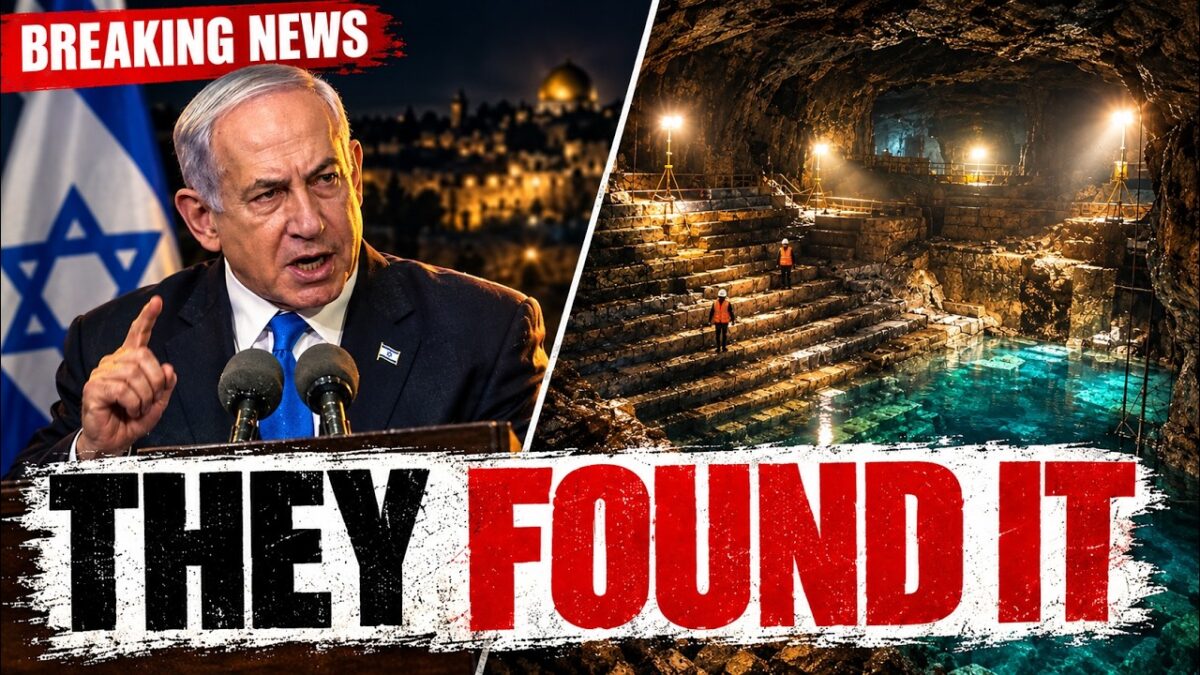
Then, in the autumn of 2004, a crew repairing a broken sewer line in Jerusalem’s Silwan neighborhood struck large stone steps beneath the soil. Archaeologists Eli Shukron and Ronny Reich were called in, and what they uncovered changed the debate. Here is what was found under Jerusalem, and what the evidence really shows.
Watch the Full Documentary
The Discovery of the Real Pool
The steps belonged to a much larger pool, built in stages, with wide stone stairs descending toward the water. Coins and pottery found in the plaster and fill dated the pool to the late Second Temple period — the first century BCE and first century CE. In other words, the pool existed at the time described in the Gospel of John, and it was far larger and more monumental than the Byzantine pool nearby.
Scholars now widely identify it as the Second Temple–period Pool of Siloam, a public reservoir and possibly a ritual bathing site for pilgrims arriving in the city.
Where the Water Came From: Hezekiah’s Tunnel
The pool was fed by the Gihon Spring through Hezekiah’s Tunnel, a channel about 1,750 feet long carved through solid rock. Traditionally linked to King Hezekiah in the late 8th century BCE, the tunnel was dug by two teams starting from opposite ends who met in the middle — an ancient engineering feat recorded in the famous Siloam Inscription.
Modern scientists tested the tunnel’s age using radiocarbon dating of plant material in the plaster and uranium-thorium dating of stalactites that grew on the ceiling after it was finished. The results were consistent with a construction date around 700 BCE, matching the biblical account.
The Pilgrimage Road and 100 Coins
From the pool, a broad stepped street — the Pilgrimage Road — climbed toward the Temple Mount. Excavations beneath it found more than 100 coins sealed under the paving stones. The latest coins dated to around 31 CE, which led researchers to argue that the street was built during the governorship of Pontius Pilate. This challenged earlier assumptions that the road was built entirely under Herod the Great.
What the Evidence Proves — and Doesn’t
The discoveries establish that a large, monumental pool existed at this location in the first century and that it was connected to the Gihon Spring and the Pilgrimage Road. They show that Jerusalem’s water system was a sophisticated piece of engineering. They do not, by themselves, prove any particular religious event took place there. Archaeology can confirm settings; faith and textual study address what happened in them.
The Final Days in 70 CE
Excavators also found evidence of the Roman destruction of Jerusalem in 70 CE, including collapsed structures and objects left behind by people sheltering in the drainage channel beneath the street. The pool was eventually filled with debris and forgotten.
Key Facts at a Glance
- Discovered: 2004, during sewer repairs in Silwan
- Period: late Second Temple, 1st century BCE–1st century CE
- Water source: Gihon Spring via the 1,750-foot Hezekiah’s Tunnel
- Dating methods: coins, pottery, radiocarbon, uranium-thorium
Why It Fascinates American Visitors
For millions of American Christians and Jews, the Pool of Siloam and Hezekiah’s Tunnel are among the most meaningful sites in Jerusalem. Many tour groups now walk through the tunnel and visit the excavated steps as part of the City of David park.
Frequently Asked Questions
Can you visit the Pool of Siloam?
Yes. Part of the pool is visible in the City of David archaeological park, and excavation continues.
Can you walk through Hezekiah’s Tunnel?
Yes. Visitors can wade through it; water is typically knee-deep.
Is the whole pool excavated?
No. Much of it remains under nearby property, and excavations have expanded in recent years.
Grand Structures explains the engineering, defense technology and megaprojects shaping the Middle East and the world. For more deep dives like this, subscribe to Grand Structures on YouTube.