You can bury a nuclear facility under 80 to 90 meters of rock to protect it from bombs. But if you want to know what the inside of that mountain actually looks like, a satellite will only take you so far. You need documents, drawings and people who have been inside. For more than a decade, the mapping of Iran’s deep underground sites, including the Fordow nuclear facility, relied heavily on old-fashioned espionage.
This is the story of how human intelligence filled in what physics could not — from the extraordinary 2018 Tehran archive raid to the long campaign against Natanz — and why all of that knowledge still required the United States to drop its heaviest bunker busters to finish the job in 2025.
Watch the Full Documentary
The Limits of Looking From Above
Satellites can reveal tunnel entrances, ventilation shafts, power lines and traffic. Radar can detect ground movement, and seismic sensors can pick up vibrations. But none of these can produce an accurate floor plan of a facility deep inside a mountain. Which halls hold the centrifuges? Where are the power feeds and cooling systems? How thick are the ceilings? Those details determine whether a strike succeeds.
The 2018 Tehran Archive Raid
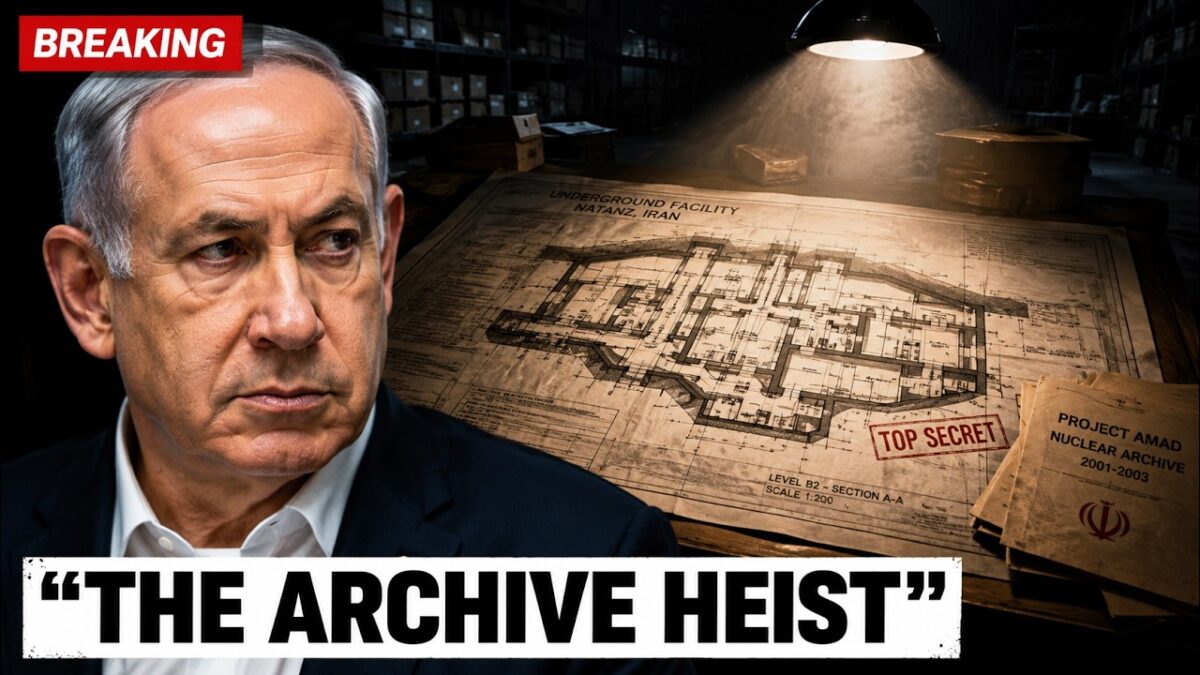
In January 2018, Mossad operatives broke into a nondescript warehouse in Tehran’s Shorabad district where Iran had stored records of its past nuclear weapons work. In a single night, according to Israeli accounts, the team cut into safes and removed around half a ton of documents, drawings and data discs before slipping out of the country.
Israeli Prime Minister Benjamin Netanyahu revealed the operation publicly that spring. The archive described the earlier “Amad” program and provided insight into how Iran planned and built sensitive facilities. Analysts and the International Atomic Energy Agency used it to ask Iran new questions about undeclared sites and materials.
A Decade on the Ground at Natanz
Natanz, Iran’s main enrichment plant, suffered a series of setbacks over the years: the Stuxnet cyberattack that damaged centrifuges, explosions in 2020 and 2021, and power failures widely attributed to sabotage. Such operations require detailed knowledge of layouts, electrical systems and supply chains — knowledge that typically comes from insiders, recruited sources and intercepted procurement records.
Fordow: Built to Be Out of Reach
Fordow, near the city of Qom, was built inside a mountain and revealed publicly in 2009. Its halls are estimated to lie roughly 80 to 90 meters below the surface. It was designed to survive air attack by any weapon Israel possessed. That fact shaped years of policy debates: Israel could gather intelligence on Fordow, but destroying it seemed to require American capabilities.
Why the United States Had to Finish the Job
In June 2025, during Operation Midnight Hammer, U.S. B-2 bombers struck Fordow with GBU-57 Massive Ordnance Penetrators — 30,000-pound bunker busters carried only by American aircraft. Reports described about a dozen being dropped on the site, targeting ventilation shafts and entry points rather than simply trying to penetrate the full depth of rock. Intelligence about the facility’s internal layout was crucial to choosing aim points.
Intelligence Versus Engineering
The story of Fordow is a reminder that depth is a defense against weapons, not against knowledge. Every bunker has to be designed, built, supplied and staffed by people. Those people create documents, procurement trails and memories — all potential intelligence sources.
Key Facts at a Glance
- Archive raid: January 2018, Tehran, about half a ton of documents
- Fordow depth: estimated 80–90 meters inside a mountain near Qom
- Weapon used in 2025: U.S. GBU-57 MOP, dropped by B-2 bombers
- Key insight: human intelligence revealed what satellites could not
Why It Matters to Americans
The intelligence partnership between Israel and the United States shaped one of the most consequential American military operations of the decade. The debate over how much damage Fordow suffered continues to drive U.S. policy toward Iran.
What Comes Next
Iran has reportedly been building even deeper sites since 2025. That makes human intelligence more important, not less. The deeper a facility goes, the fewer physical signals reach the surface — and the more valuable an insider becomes.
Frequently Asked Questions
What did the Tehran archive contain?
Documents, designs and data about Iran’s past nuclear weapons research program.
How deep is Fordow?
Estimates put its main halls around 80 to 90 meters below the mountain surface.
Why couldn’t Israel strike Fordow alone?
Israel lacked a bomb and bomber combination able to reach its depth; the U.S. GBU-57 and B-2 provided that.
Grand Structures explains the engineering, defense technology and megaprojects shaping the Middle East and the world. For more deep dives like this, subscribe to Grand Structures on YouTube.