When hundreds of ballistic missiles, rockets and drones fill the sky at once, intercepting every one of them is mathematically impossible and economically disastrous. No country has enough interceptors to fire at everything, and many threats are heading for empty fields or the sea anyway.
So Israel relies on software that calculates the predicted impact point of every threat in real time — and deliberately lets the harmless ones fall. This is the hidden brain of the Israel missile defense system, and the reason the true arms race is about computing power versus volume.
Watch the Full Documentary
Tracking Hundreds of Objects Without Moving
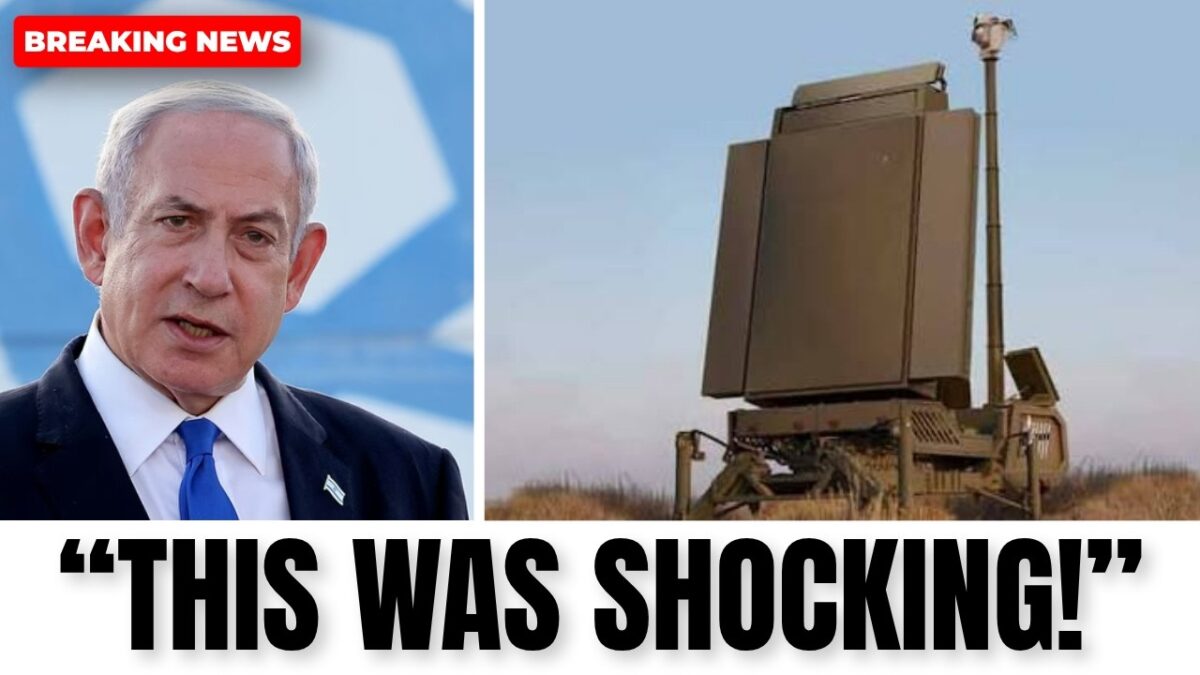
Modern air defense radars use Active Electronically Scanned Arrays (AESA). Instead of a rotating dish, thousands of small transmit-receive modules steer radar beams electronically in microseconds. That allows a single radar to track many targets simultaneously, switching between search and tracking tasks faster than any mechanical system.
During a massive barrage, radars may need to follow hundreds of objects at once — missiles, boosters, debris and decoys — updating each track many times per second.
Predicting Where Each One Lands
For each ballistic threat, software estimates its trajectory and impact area. It then compares those predictions with maps of cities, bases and critical infrastructure. Threats aimed at uninhabited areas are tracked but not engaged. This alone can eliminate a large share of potential engagements, saving interceptors for the threats that matter.
The Assignment Problem
Once threats are prioritized, the system must decide which interceptor from which battery should engage each target, and when. That is a version of the weapon-target assignment problem, which computer scientists classify as NP-hard: the number of possible combinations explodes as targets and interceptors increase, making a perfect solution impractical in real time.
Battle management software, developed in Israel by firms including mPrest, uses fast heuristic algorithms to find very good solutions in fractions of a second. It considers interceptor inventory, battery positions, the probability of a kill and the time remaining before impact.
Layered Coordination
Israel’s defense includes Arrow 3, Arrow 2, David’s Sling, Iron Dome and Iron Beam, plus allied systems such as U.S. Aegis ships and THAAD. Battle management must coordinate across layers so that two systems do not waste interceptors on the same target, and so that leakers from one layer are passed to the next.
Compute Versus Volume
Attackers can try to overwhelm defenses with sheer numbers, decoys and simultaneous arrivals. Defenders respond with better sensors, faster algorithms and more efficient allocation. The contest is increasingly decided not by the missiles themselves but by data processing — how quickly the defense can understand and act on what it sees.
Key Facts at a Glance
- Sensor type: AESA radars tracking many targets simultaneously
- Key software: battle management and weapon-target assignment
- Math challenge: NP-hard optimization solved with heuristics
- Strategy: ignore threats heading for empty areas
The American Angle
The U.S. military is pursuing similar integrated systems, such as the Army’s IBCS (Integrated Battle Command System), to link radars and launchers across services. Israel’s real-world combat data is a valuable reference for American developers.
Frequently Asked Questions
Does Israel really ignore some missiles?
Yes. Threats predicted to land in open areas are often not intercepted.
What does NP-hard mean here?
That finding the perfect interceptor allocation becomes impractically complex as numbers grow, so fast approximations are used.
Can AI improve missile defense?
AI can help classify targets and optimize decisions, though humans remain responsible for oversight.
Grand Structures explains the engineering, defense technology and megaprojects shaping the Middle East and the world. For more deep dives like this, subscribe to Grand Structures on YouTube.