When a ballistic missile is launched, its warhead spends much of its flight coasting through the vacuum of space at many times the speed of sound. Intercepting it there, before it plunges back into the atmosphere, is one of the hardest problems in all of aerospace engineering. Israel’s answer is Arrow 3 — the outermost layer of the country’s air defense system, developed by Israel Aerospace Industries with Boeing and the U.S. Missile Defense Agency.
Arrow 3 has to solve a strange puzzle: how do you steer a missile where there is no air for fins to push against? This is how the Arrow 3 missile works.
Watch the Full Documentary
Israel’s Layered Shield
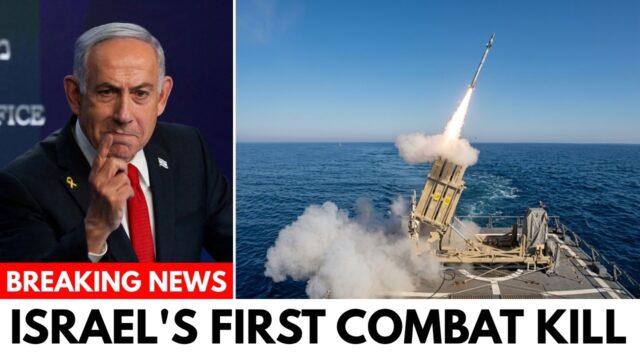
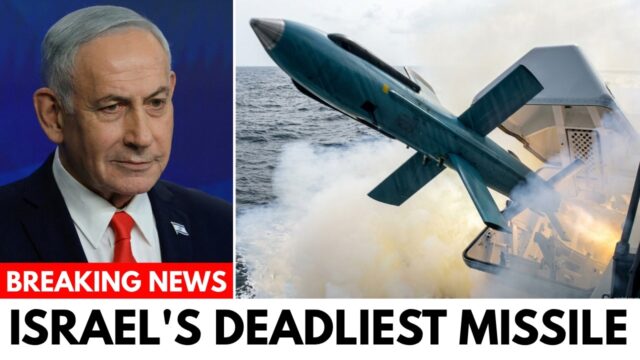
Israel defends itself with several layers. Iron Dome handles short-range rockets, David’s Sling covers medium-range threats, Arrow 2 intercepts ballistic missiles in the upper atmosphere, and Arrow 3 engages them in space. Hitting a threat early, far from Israel, gives more time for a second shot and keeps debris — including any chemical or nuclear payload — away from population centers.
Super Green Pine: Seeing the Threat
Everything starts with radar. The Elta EL/M-2080 “Green Pine” family of long-range radars, including the upgraded Super Green Pine, can detect ballistic missiles hundreds of miles away shortly after launch. By tracking the missile’s trajectory, the battle management system predicts where it will be in the future and calculates an intercept point in space — far from where the target is when Arrow 3 launches.
A Two-Stage Climb to Space
Arrow 3 is a two-stage solid-fuel rocket. The first stage blasts it out of the dense lower atmosphere, and the second stage carries it above 100 kilometers, beyond the edge of space. Solid fuel is crucial: it can be stored in the launcher for years and fired within seconds, with no fueling process.
Steering Without Air
Once the kill vehicle separates, it is in near-vacuum. Aerodynamic fins are useless there because there is no air to deflect. Instead, the kill vehicle steers using thrust: its own small rocket motor with a thrust-vectoring nozzle that can be tilted to push the vehicle in different directions, along with small control thrusters. An onboard seeker, mounted on a gimbal, locks onto the target and guides the final approach.
The kill vehicle can also be retargeted in flight. If the radar refines the threat’s position, it updates the interceptor’s course on the way up.
Hit-to-Kill: No Explosives Needed
Arrow 3 does not rely on a large explosive warhead. It destroys its target by colliding with it directly. At closing speeds of several kilometers per second, the kinetic energy released is greater than the energy of an equivalent mass of high explosive. Hit-to-kill is extremely demanding — it is often compared to hitting a bullet with a bullet — but it is more reliable at destroying the warhead itself.
Combat Record
Arrow 3 made its first combat interception in 2023 against a missile fired from Yemen, and it played a major role in defending Israel against Iranian ballistic missile barrages in 2024, 2025 and 2026. Germany has also purchased Arrow 3, the largest defense export deal in Israel’s history.
Key Facts at a Glance
- Developers: Israel Aerospace Industries and Boeing, with the U.S. Missile Defense Agency
- Intercept zone: outside the atmosphere, above 100 km
- Kill mechanism: hit-to-kill collision
- Radar: Super Green Pine long-range radar
The U.S. Connection
American taxpayers co-fund the Arrow program, and Boeing builds major parts of the interceptor in the U.S. Arrow 3 also shares concepts with American systems like THAAD and the Navy’s SM-3, and its combat data informs U.S. missile defense planning.
Frequently Asked Questions
What is the difference between Arrow 2 and Arrow 3?
Arrow 2 intercepts in the upper atmosphere with a fragmentation warhead; Arrow 3 intercepts in space using hit-to-kill.
How fast is Arrow 3?
Exact figures are classified, but it reaches hypersonic speeds and altitudes above 100 km.
Which countries use Arrow 3?
Israel and Germany, with other countries reportedly interested.
Grand Structures explains the engineering, defense technology and megaprojects shaping the Middle East and the world. For more deep dives like this, subscribe to Grand Structures on YouTube.