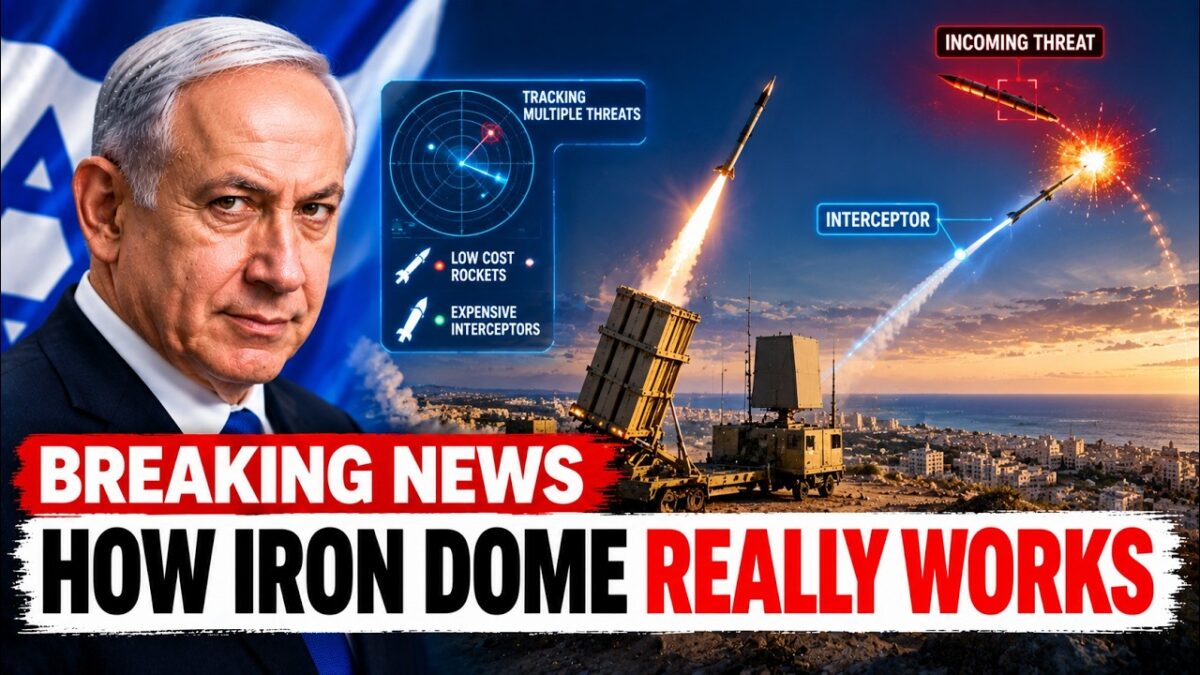
Iron Dome does not try to shoot down every rocket. That is not a flaw — it is the core of its design. Each Tamir interceptor costs tens of thousands of dollars, often cited at around $50,000 or more. Rockets fired from Gaza or Lebanon may cost a few hundred. If Iron Dome fired at every launch, it would run out of missiles quickly and waste enormous sums on rockets headed for empty fields or the sea.
So the system is built around a question: will this rocket hurt anyone? Here is how Iron Dome works, step by step, and why a machine built to save lives spends much of its time deliberately doing nothing.
Watch the Full Documentary
Step 1: Detect the Launch
Iron Dome’s EL/M-2084 radar continuously scans the sky. When a rocket or mortar is launched, the radar detects it within moments and starts tracking it. The radar measures position and speed repeatedly, building a precise picture of the rocket’s flight path.
Step 2: Predict the Impact Point
Rockets used against Israel are mostly unguided, following a ballistic arc after their motor burns out. That makes their path predictable. The battle management and weapon control center (BMC), developed with Israeli firm mPrest, calculates where each rocket will land and compares that point with maps of populated areas and critical infrastructure.
Step 3: Decide — Engage or Ignore
If the predicted impact is in open ground, the system lets the rocket fall. If it threatens a city, town, base or key facility, the system assigns an interceptor. During heavy barrages this decision is made for dozens or hundreds of rockets at once, prioritizing the most dangerous threats.
Step 4: Launch the Tamir
The Tamir interceptor is launched from a mobile launcher holding 20 missiles. It flies toward a predicted intercept point, receiving updates from the radar along the way. As it approaches, its own seeker locks onto the target, and a proximity fuze detonates its warhead close to the rocket, destroying it in the air.
Engineering Economics
This triage approach makes Iron Dome both effective and affordable. In many rounds of fighting, Israeli officials have reported interception rates around 90% for rockets the system chose to engage. Rockets that land in empty areas cause little or no harm. The result is a defense that conserves interceptors for the threats that matter.
The Weak Spots
No system is perfect. Very short-range threats may give too little time to intercept. Massive salvos can saturate batteries. Drones and cruise missiles fly unpredictable paths. Debris from intercepts can still fall on populated areas. That is why Iron Dome is one layer in a larger system that includes David’s Sling, Arrow, Iron Beam and civil defense.
Key Facts at a Glance
- Developer: Rafael, with Elta radar and mPrest software
- Interceptor: Tamir, roughly $50,000+ each
- Launcher capacity: 20 interceptors
- Key logic: engage only rockets predicted to hit protected areas
- Reported success: around 90% for engaged targets
The American Connection
The United States has provided billions of dollars to support Iron Dome, and Raytheon co-produces Tamir components in the U.S. The U.S. Army bought two Iron Dome batteries, and the U.S. Marine Corps has tested Tamir for its own air defense needs.
Frequently Asked Questions
How does Iron Dome detect missiles?
With its EL/M-2084 AESA radar, which tracks launches within seconds.
Does Iron Dome stop ballistic missiles?
No. Long-range ballistic missiles are handled by Arrow and David’s Sling.
How many Iron Dome batteries does Israel have?
Israel operates around a dozen or more batteries; exact numbers are not public.
Grand Structures explains the engineering, defense technology and megaprojects shaping the Middle East and the world. For more deep dives like this, subscribe to Grand Structures on YouTube.