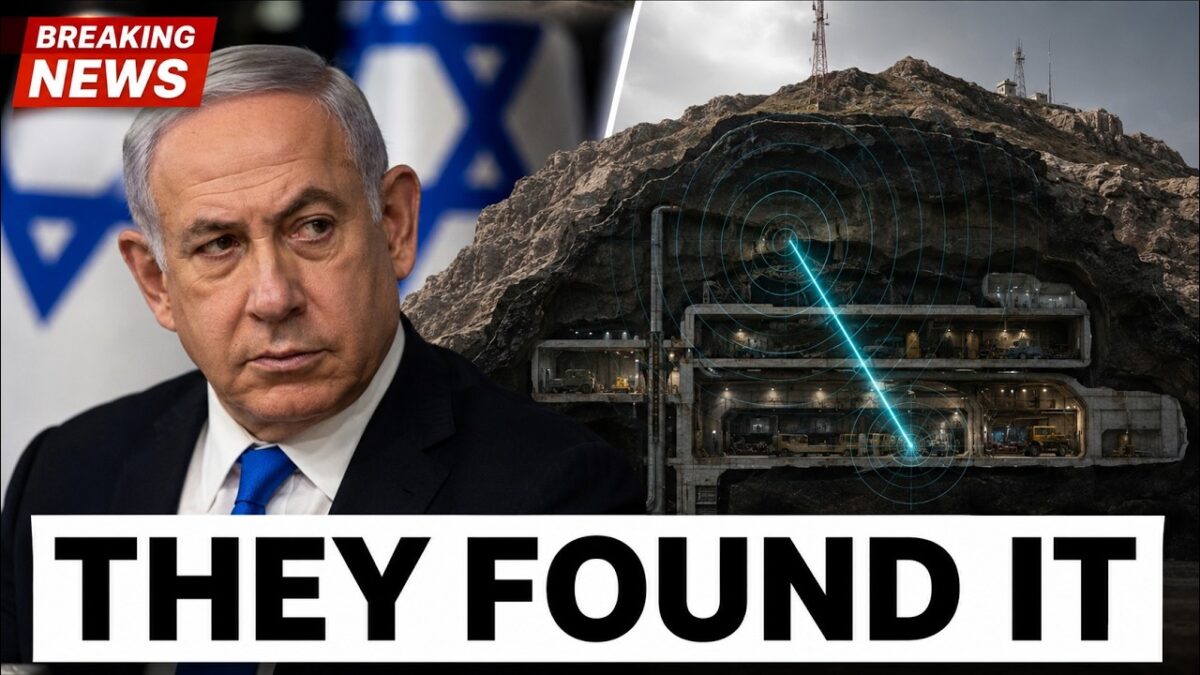
It is one of the most popular military myths on the internet: Israel has a radar that can see straight through solid rock, like an X-ray of a mountain. After reports of strikes on Iranian underground facilities, social media filled with claims of secret technology that made bunkers transparent.
The truth is less magical but more interesting. No Israel radar system can image a facility buried under hundreds of feet of granite. Instead, intelligence agencies combine several different technologies, each revealing a piece of the puzzle. Here is how underground targets are actually located.
Watch the Full Documentary
Why Radar Can’t See Through Mountains
Radar works by bouncing radio waves off objects. In air, those waves travel easily. In rock and soil, they are absorbed and scattered quickly, especially in wet or mineral-rich ground. Ground-penetrating radar (GPR) is used by engineers and archaeologists, but it typically reaches only a few meters, or tens of meters in ideal dry conditions. It cannot penetrate a mountain from orbit or from an aircraft.
Technology 1: Satellite Imagery
The first step is watching the surface. Optical, infrared and radar satellites track construction, tunnel portals, spoil piles, roads, ventilation shafts and vehicle traffic. Over months and years, this reveals the outline of an underground complex: where it starts, how big it might be and how it is used.
Technology 2: Seismic Analysis
Excavation and large machinery generate vibrations that travel through rock. Seismic sensors, sometimes placed covertly or far away, can pick up those signals. Explosions used in tunneling, heavy drilling and big generators produce distinctive patterns that help locate and characterize underground work.
Technology 3: Signals Intelligence
Underground facilities need communications, power management and logistics. Intercepted communications, procurement records and electronic emissions provide clues about what a site does and where key equipment is located. Signals intelligence often reveals details that no physical sensor could.
Technology 4: Electromagnetic and Gravity Sensors
Large voids and dense equipment slightly change local gravity and magnetic fields. Sensitive gravimeters and magnetometers, flown on aircraft or placed on the ground, can detect such anomalies. These methods have limits in rugged terrain, but they can support other evidence about tunnel locations.
Triangulating the Target
Each technology alone is ambiguous. Together, they allow analysts to triangulate where halls, shafts and entrances lie. When combined with human intelligence — like the documents seized in the 2018 Tehran archive raid — they can produce a detailed picture of a facility without anyone needing “X-ray vision.”
Key Facts at a Glance
- Myth: radar that images through mountains
- Reality: radar penetrates only meters into rock
- Actual methods: satellites, seismic sensors, SIGINT, gravity and magnetic surveys
- Key idea: data fusion, not a single magic device
Why the Myth Persists
Precision strikes on hidden sites can seem impossible without some secret technology. But the real capability is patience and integration: years of collection and analysis. Understanding that helps American readers better interpret headlines about strikes and intelligence claims.
Frequently Asked Questions
How deep can ground-penetrating radar see?
Usually a few meters, and occasionally a few tens of meters in very dry, favorable ground.
Can satellites detect tunnels?
They detect surface evidence of tunneling rather than the tunnel itself.
Do quantum sensors change this?
Quantum gravimeters may improve void detection in the future, but they are still emerging technology.
Grand Structures explains the engineering, defense technology and megaprojects shaping the Middle East and the world. For more deep dives like this, subscribe to Grand Structures on YouTube.