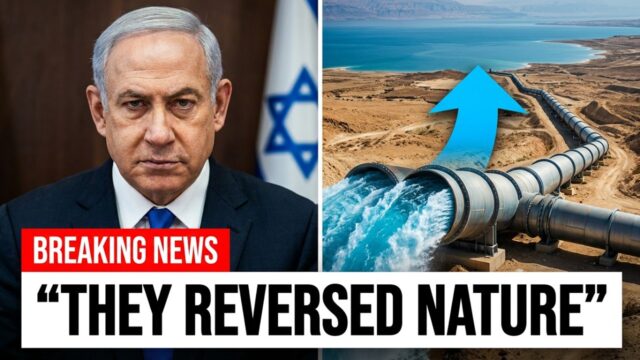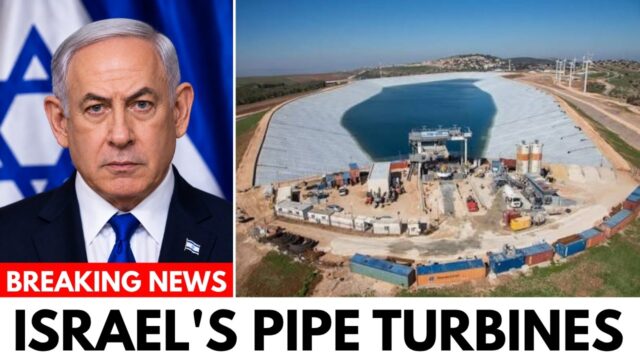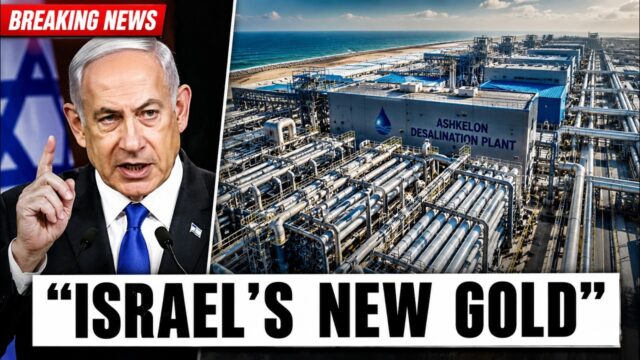
Jerusalem sits roughly half a mile above sea level in the Judean hills, with no great river and no natural lake to drink from. Most of its water now begins on the Mediterranean coast, at desalination plants that turn seawater into drinking water. That leaves engineers with an enormous task: pushing tens of thousands of tons of water uphill into the mountains every hour, every day, for a city of nearly a million people.
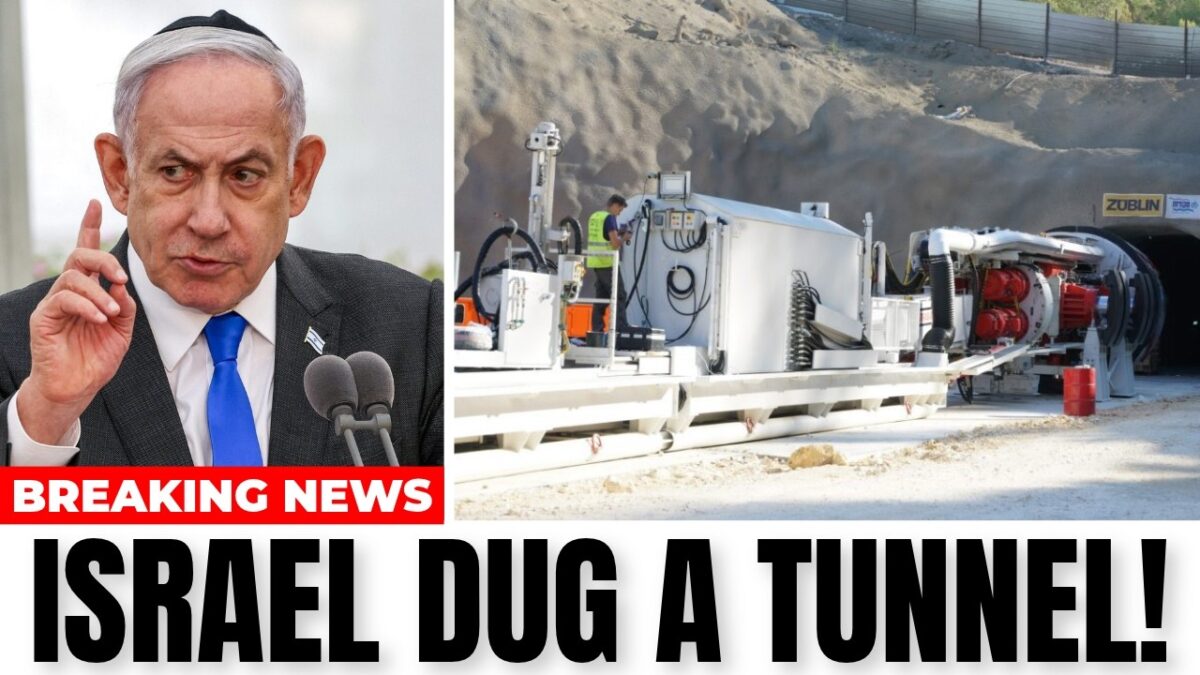
For the steepest part of Jerusalem’s new Fifth Water Line, Israel’s national water company, Mekorot, did not lay pipes across the forested nature reserves on the surface. Instead it bored an 8-mile tunnel up to 1,000 feet underground, slid giant steel pipe inside, and locked it in place with concrete. Here is why.
Watch the Full Documentary
Why Jerusalem Needs a Fifth Line
Jerusalem’s water supply has historically relied on several large pipelines climbing from the coastal plain. As the city and its suburbs grew, and as Israel shifted to desalinated seawater, those lines became a bottleneck. The roughly $700 million Fifth Water Line adds major capacity and, just as importantly, redundancy — so that a failure or attack on one line does not leave the capital short of water.
Why Put a Pipe Inside a Tunnel?
Laying a large pipeline on the surface through the Judean hills would have meant cutting a wide scar through protected forests and nature reserves, steep slopes and private land. A deep tunnel avoids all of that. It also shortens the route, provides a protected corridor safe from landslides and sabotage, and allows the pipe to follow a smoother gradient than the hilly surface.
But a rock tunnel alone is not a pressure pipe. Water pumped up to Jerusalem is under very high pressure, and limestone is cracked and porous. So engineers placed roughly 14,000 tonnes of steel pipe, about 8.5 feet in diameter, inside the tunnel and filled the gap between pipe and rock with around 82,000 cubic yards of concrete.
A Tunnel Boring Machine Meets Hidden Caves
The tunnel was dug with a tunnel boring machine roughly 800 feet long including its trailing support systems. The Judean hills are karst country: limestone dissolved over millions of years into hidden caves and voids. During the drive, the machine broke into cavities, including caves decorated with stalactites. When a TBM hits a void, it loses the rock it needs to push against and steer. Crews had to stop, fill or bridge the cavities, and carefully restart the machine.
Stopping a Steel Pipe From Floating
Here is a problem few people think about. An empty steel pipe surrounded by wet concrete behaves like a boat. Fresh concrete is a heavy fluid, and the buoyant force on a hollow 8.5-foot pipe is enormous — enough to lift it off its supports and leave it misaligned. Engineers solved this by anchoring the pipe, pouring the concrete in stages so that each lift partially set before the next, and in some cases weighting or partially filling the pipe to counter the uplift.
Pumping Water Half a Mile Uphill
Lifting water from near sea level to Jerusalem’s elevation takes large pumping stations and a lot of electricity. Every meter of lift has a cost, which is why tunnel alignment, pipe diameter and friction losses were optimized together. Wider, smoother pipes reduce friction, which in turn reduces the energy needed to deliver each cubic meter.
Key Facts at a Glance
- Project: Jerusalem’s Fifth Water Line, by Mekorot
- Estimated cost: about $700 million
- Tunnel length: about 8 miles (13 km), up to 1,000 feet deep
- Pipe: about 8.5 feet wide, roughly 14,000 tonnes of steel
- Backfill: about 82,000 cubic yards of concrete
Lessons for U.S. Water Systems
New York City’s Water Tunnel No. 3 and Los Angeles’ long aqueducts face similar questions about redundancy and protection. Jerusalem’s approach — a protected deep tunnel carrying a pressure pipe — is a model for cities that cannot afford a single point of failure in their water supply.
Frequently Asked Questions
Where does Jerusalem’s water come from?
Increasingly from desalination plants on the Mediterranean coast, plus aquifers and the national grid.
Why not just use the tunnel itself as the pipe?
Fractured limestone cannot hold high water pressure without leaking, so a steel pipe encased in concrete is required.
Who builds Israel’s water infrastructure?
Mekorot, Israel’s national water company, builds and operates most of the bulk water network.
Grand Structures explains the engineering, defense technology and megaprojects shaping the Middle East and the world. For more deep dives like this, subscribe to Grand Structures on YouTube.